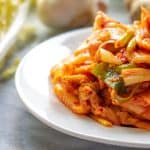
Fresh Homemade Kimchi - w/o buying a lot of stuff
The fifth taste is not “umami” but pungency according to Korean cuisine, and it's on full display in this very easy kimchi recipe. Make it from scratch without buying a lot of ingredients. This recipe makes about 6 cups of kimchi that can be eaten right away or stored in the fridge.
Servings 12 servings of ½ c each
Calories 30kcal
Equipment
- 1 large mixing bowl at least 4 qt in size
Ingredients
- 2 lb napa cabbage, about 1 medium sized head or 12 cups chopped cut into 2 - 3" pieces
- 1 ½ teaspoon salt table salt, or 1 Tb kosher or chunky sea salt, see Note 1
- ¼ c Korean red chili flakes aka gochugaru, preferably coarse ground instead of fine powder
- ¼ c fish sauce
- 2 Tb garlic minced
- 6 ea green onion cut into 2-3" pieces, white stems slice lengthwise in half
Instructions
- Thoroughly mix napa cabbage with the salt. Let it sit for about an hour until you can bend a piece of white stem without it snapping in half. It should be softened but not completely wilted.
- Rinse the cabbage with water to remove excess salt. Drain.
- Mix together the red chili flakes, fish sauce, and garlic to make a seasoning paste.
- Massage the seasoning paste into the drained cabbage along with the frehs green onion.
- Taste and adjust seasoning with additional fish sauce or salt.
- Serve fresh or store in the fridge. See Note 3 and 4.
Notes
-
- Coarse sea salt is preferred because the magnesium chloride keeps the cabbage chewy and crunchy. Use half the amount in table salt if that is what you have. I used pink Himalayan salt, which measures in volume similar to table salt.
- Don't forget and over salt the cabbage for too long. It should still have vibrance, character, and freshness, not mushiness after the brining step.
- Storage - Speed up the fermentation process by leaving the kimchi out at room temperature overnight for the first day.
- Package - Layer the kimchi tightly into containers. Pack it down, so it becomes submerged in liquid with few air bubbles. Cover with a loose seal, so it can breathe. Otherwise, the air bubbles that form as it starts to ferment can cause the container to explode.
- Variations - Add fresh minced chili, ginger, sesame oil, rice vinegar, and/or sugar for extra flavor. Shredded daikon, carrot, and onions are other vegetables you could add for extra texture.
Nutrition
Serving: 0.5c | Calories: 30kcal | Carbohydrates: 6g | Protein: 2g | Fat: 1g | Saturated Fat: 0.2g | Polyunsaturated Fat: 0.5g | Monounsaturated Fat: 0.2g | Sodium: 1049mg | Potassium: 297mg | Fiber: 3g | Sugar: 2g | Vitamin A: 1708IU | Vitamin C: 21mg | Calcium: 80mg | Iron: 1mg