




Coho salmon is often seen as the most subtly flavored salmon, while still being good enough to sell as filets instead of heading to the cannery. This recipe infuses the salmon with a subtle earthiness from banana leaves and provides contrast with a punchy Vietnamese dipping sauce.

Whole salmon is the silvery gift of summertime. Coho salmon is perhaps the most affordable, and that is why I chose it for this recipe.
Cooking a whole salmon is dare I say, the best way to cook salmon. It retains so much moisture and juiciness being cooked on the bone. You don't need to do much else to it. This banana leaf salmon recipe works well to just subtly infuse it with some aromatics.
Trout would also work well with this recipe. If you like whole fish, try this oven baked trout with lemon sauce. Coho salmon would also work well as Hawaiian salmon or any of these recipes for sockeye salmon.
Jump to:
Ingredients
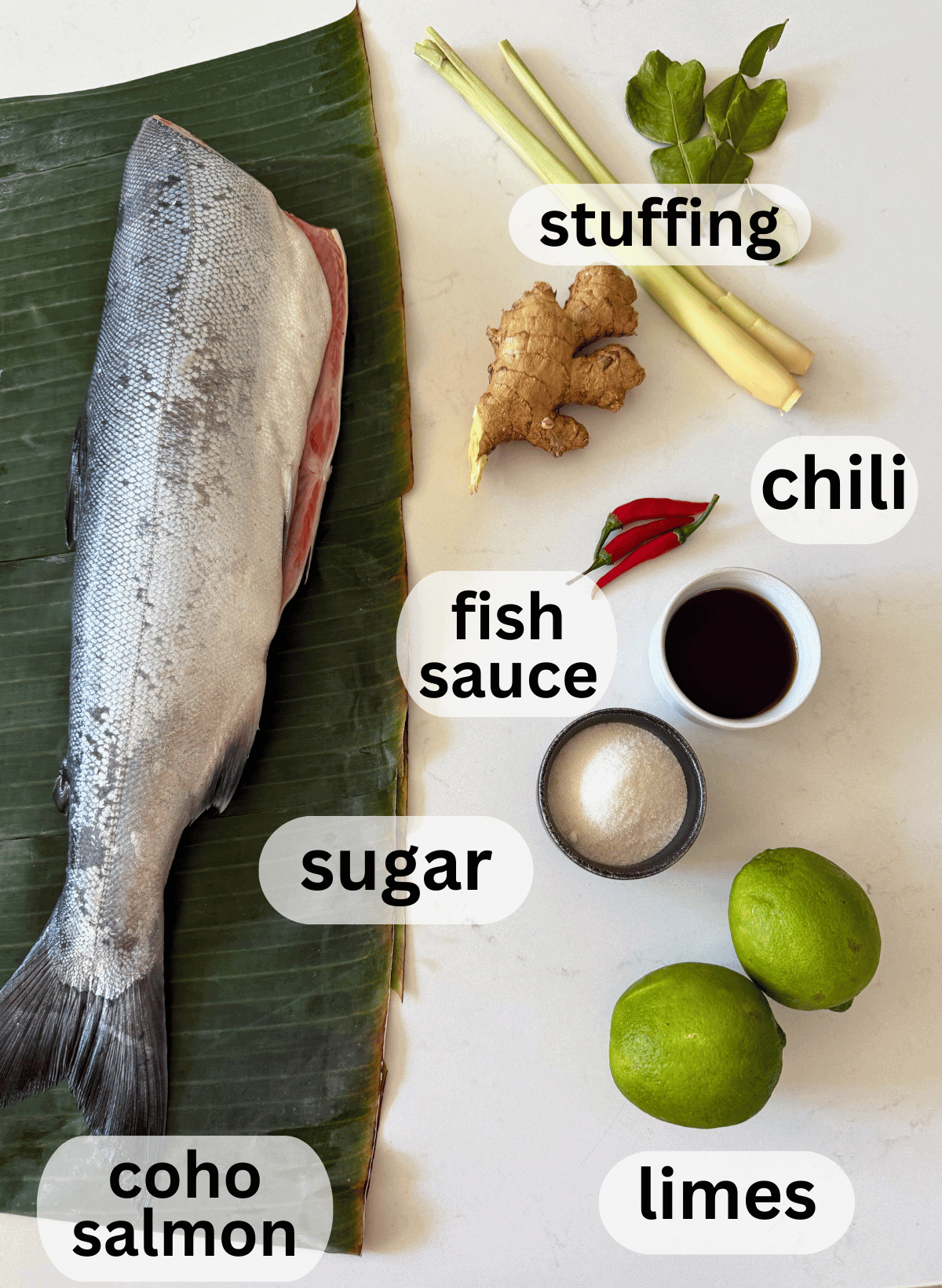
- Coho Salmon - I used Coho salmon because that is what I could find for a whole salmon without going bankrupt (with a king salmon that is upwards of $15 per pound). However, this recipe works with any type of whole salmon. it would also work very well with a whole trout.
- Stuffing - I used a combination of fresh ginger, lemongrass, and kaffir lime leaves. However, you can substitute with lemons and cilantro instead.
See recipe card for quantities.

Coho Salmon vs. Sockeye Salmon
Coho salmon is similar is size and is also abundantly fresh in the summer time. Here are some of the differences, in case you choose sockeye.
Coho Salmon (Silver Salmon)
- Flavor: Mild, delicate, slightly sweet.
- Texture: Medium-firm, leaner than sockeye, moist when cooked properly.
- Size: Typically 6–12 lbs (smaller than sockeye).
- Color: Light reddish-orange flesh, less intense than sockeye.
- Season: Late summer to early fall (varies by region).
- Availability: Often more affordable; widely available fresh and frozen.
Sockeye Salmon (Red Salmon)
- Flavor: Rich, robust, and distinctly salmon-forward.
- Texture: Firm, meaty, and oilier than coho.
- Size: Typically 5–15 lbs (slightly larger and thicker fillets).
- Color: Deep ruby-red flesh that stays vibrant when cooked.
- Season: Mid-summer peak (June–July).
- Availability: Highly prized, often more expensive; strong demand for wild-caught.
Instructions

- Step 1: Season the salmon with salt.
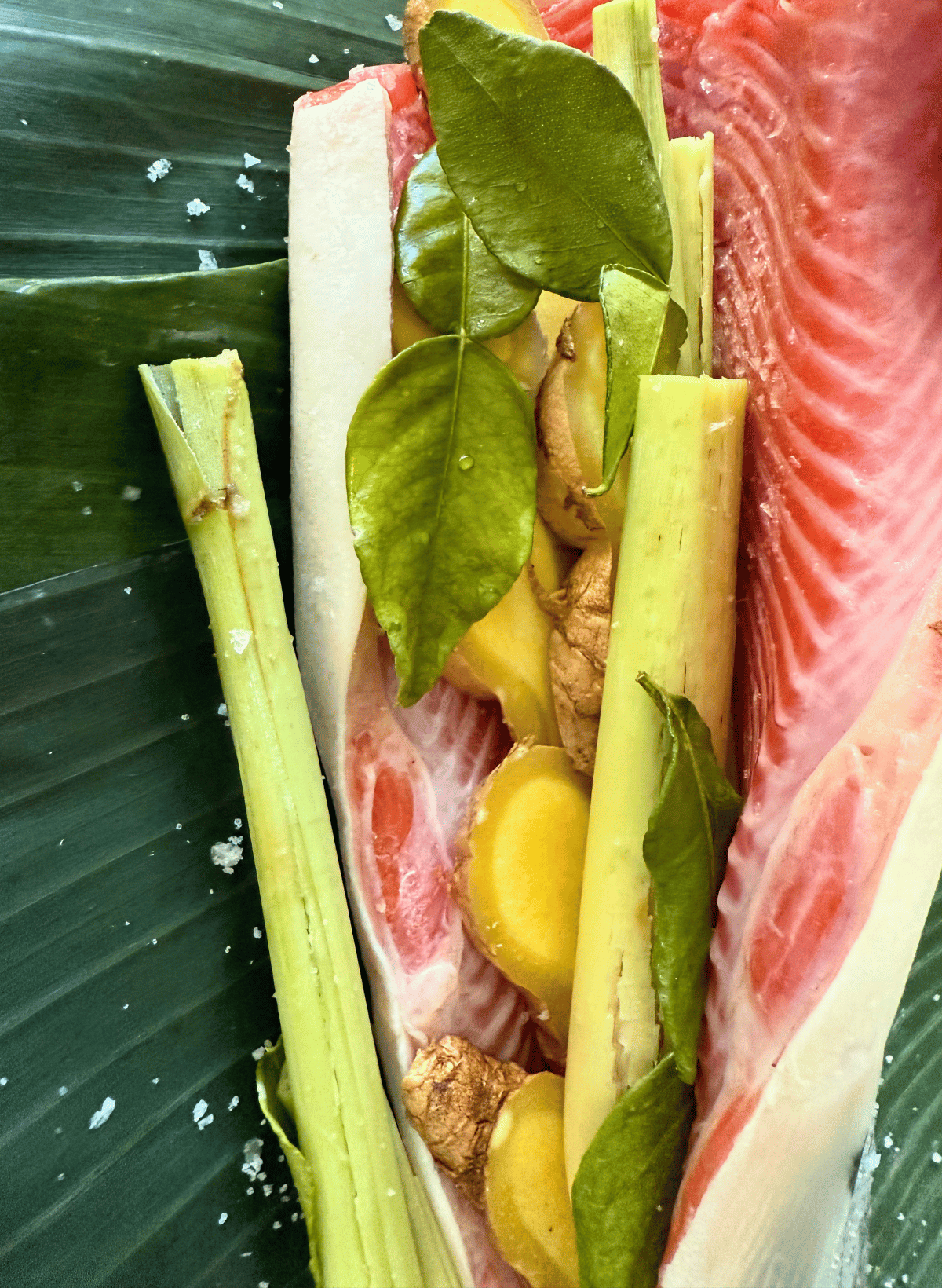
- Step 2: Stuff with the stuff.

- Step 3: Lay on clean banana leaves.

- Step 2: Roll in the banana leaves, but don't over roll or else the leave will be hard to remove.
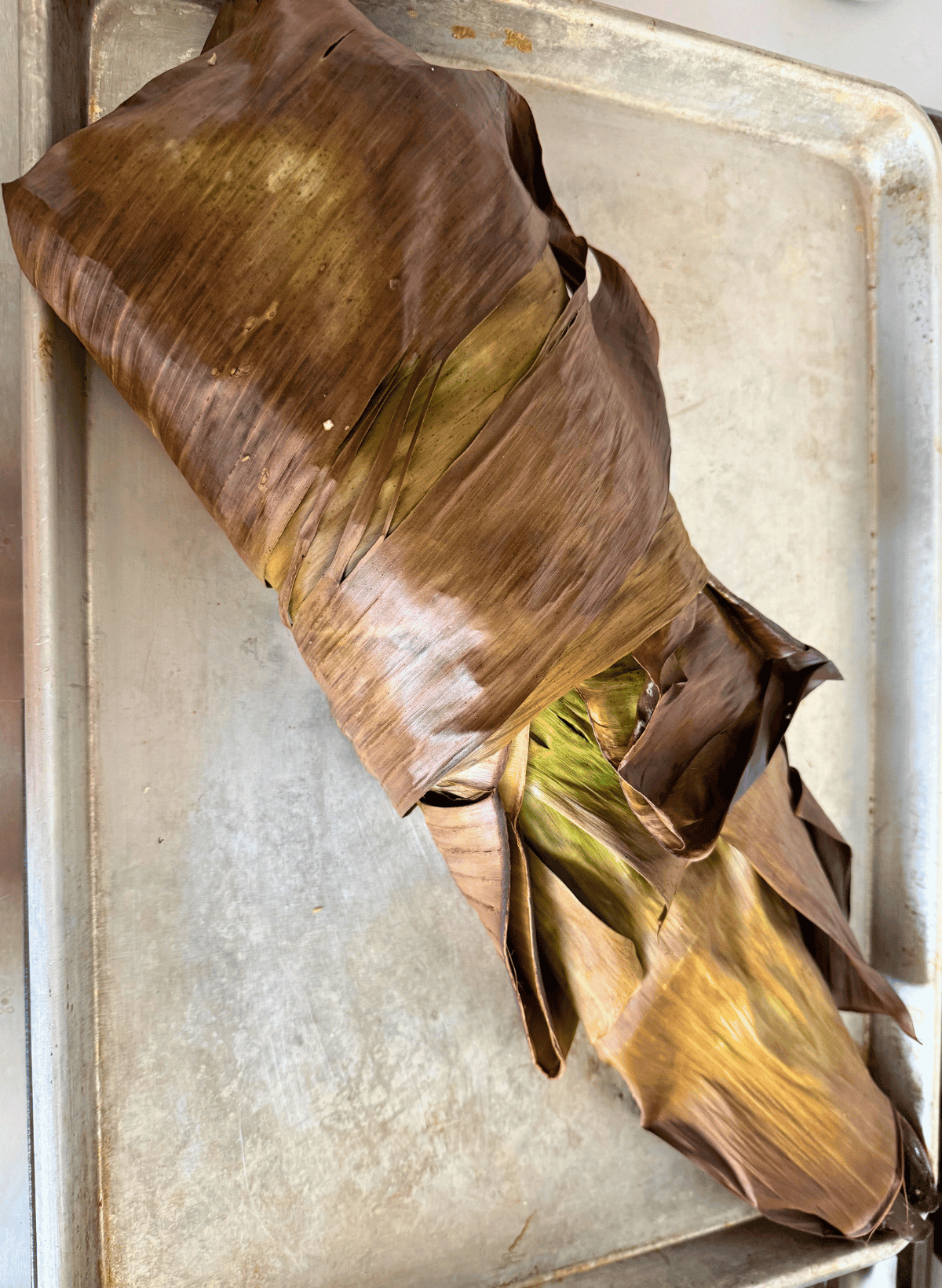
- Step 3: Bake in a 400 degree F. oven.
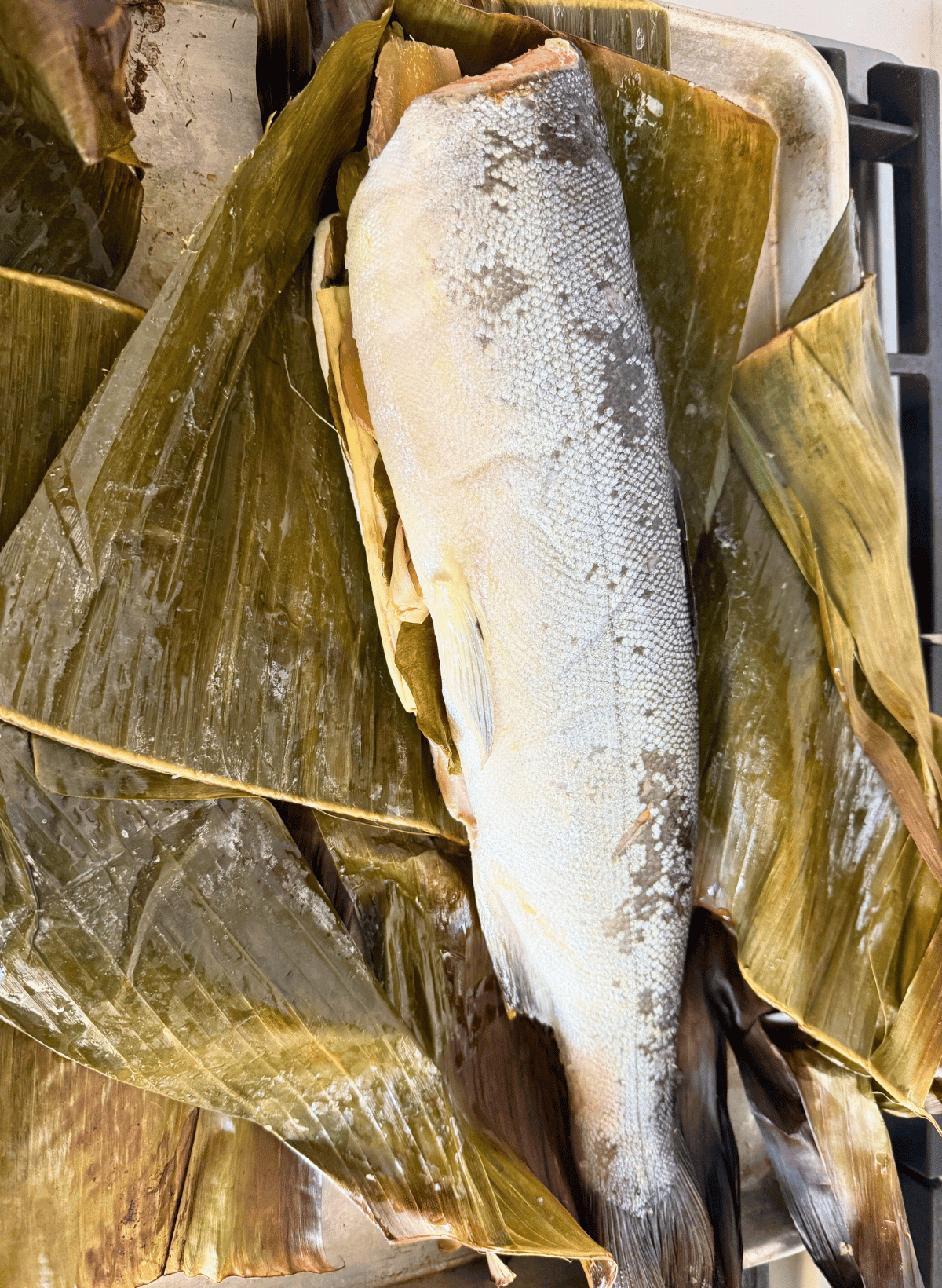
- Step 4: Unravel the banana leaves. Serve as is or butterfly the flesh.

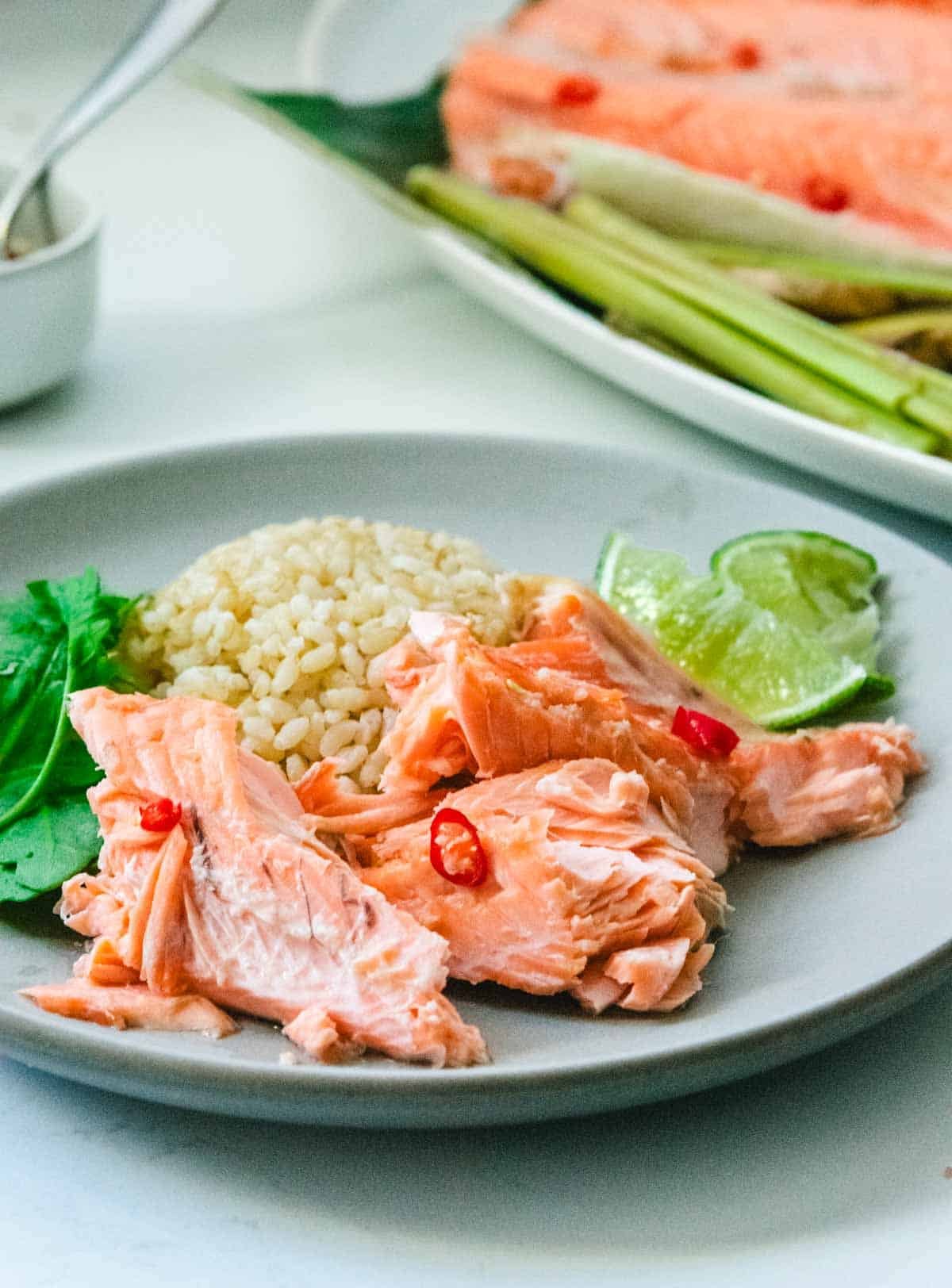
- Step 3: Via the belly side, you can slide a metal spatula over the bones to flip open top side of the fillet.

- Step 4: Remove the bones to reveal more of the orange flesh.
Hint: Make sure you wash the banana leaves before using. You don't know what kind of ickiness is on those plant leaves, since they're not grown for consumption.

Salmon Pecking Order
Of all the different types of salmon, Coho is often seen as the most subtle yet still versatile without heading straight for the cannery.
King Salmon (Chinook)
- Highest fat content, buttery texture, prized for its luxurious flavor.
- Large fillets, excellent for grilling, roasting, or raw applications.
- The most expensive and considered the “gold standard.”
Sockeye Salmon (Red)
- Deep red flesh, bold and robust flavor.
- Firm, meaty texture that holds up to grilling, smoking, and curing.
- Popular with chefs for color and intensity.
Coho Salmon (Silver)
- Milder, delicate flavor with medium-firm texture.
- Leaner than sockeye but more versatile for everyday cooking.
- More affordable and widely available.
Pink Salmon (Humpback)
- Mildest flavor and lowest fat content.
- Soft, pale flesh; often canned or used in salmon burgers.
Chum Salmon (Keta/Dog)
- Lean, mild, pale flesh with lower oil content.
- Often used for canning, smoking, drying, or roe (ikura).
Storage
Store leftovers in an airtight container in the fridge. Consume within 2-3 days.
Top Tips
- Banana leaves are usually found in the freezer section of Asian supermarkets. Because they are already 'wet', they don't need to be soaked in water to prevent burning in the oven or grill. Make sure to defrost and wash prior to using, to remove any chemicals/pesticides from these leaves grown in tropical weather.
- This recipe uses a 2-3 lb Coho salmon that will feed about 4-6 people. If using a larger salmon, adjust the cooking time. A general rule of thumb is 15-20 minutes of cooking time per pound of fish.
- This recipe also works really well on the grill on an outdoor BBQ. The banana leaves protect the skin from the grill, so it doesn't stick.
Recipe
Banana Leaf Wrapped Whole Coho Salmon
Ingredients
- 2-3 lb whole coho salmon gutted and scaled
- salt to taste for me this is about 2 teaspoon of coarse sea salt
- 2 oz ginger skin on, sliced ¼" thick
- 1 ea stalk lemongrass lightly smashed and cut into 3" pieces, or ½ lemon sliced
- 4 ea kaffir lime leaves or cilantro stalks
- 2-3 ea banana leaves washed and dried, See Note 1
Fish Sauce Dipping Sauce (Nuoc Cham)
- ¼ c fish sauce
- 2 Tb water
- 3 Tb sugar
- 1 teaspoon chopped fresh chili
- 2 Tb lime juice about ½ lime squeezed
Garnish
- lime wedges
Instructions
- Preheat the oven to 400 degrees F. Place a rack in the middle of the oven.
- Pat the salmon dry with paper towels. Sprinkle the skin and insides with salt.
- Stuff the belly of the salmon with the ginger, lemongrass or lemons, and lime leaves or cilantro.
- Lay the banana leaves horizontally, and place the salmon vertically in the middle. Wrap the salmon in the banana leaves by rolling them a couple times. Just note, you will need to unravel the banana leaves after cooking, so just a couple layers of banana leaves will do.
- Center the banana leaf wrapped salmon a sheet pan. Bake for 30-40 min in the oven. A thermometer should reach 125 degrees F for medium to medium rare salmon or 145 degrees F for well done. I prefer taking it to 125 degrees for more juiciness.
- While it's cooking, mix together the dipping sauce ingredients until the sugar is dissolved. I like to shake it all together in a small mason jar that doubles as the storage container.
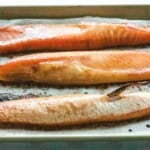
- Remove the salmon from the oven and gently unroll the salmon from the banana leaves. At this point, you can serve the fish whole as is. Or I like to split it open to reveal two halves of the fillet and remove the bones from the center.
- Serve hot with with the dipping sauce on the side and lime wedges.
Notes
- Banana leaves are usually found in the freezer section of Asian supermarkets. Because they are already 'wet', they don't need to be soaked in water to prevent burning in the oven or grill. Make sure to defrost and wash prior to using, to remove any chemicals/pesticides from these leaves grown in tropical weather.
- This recipe uses a 2-3 lb Coho salmon that will feed about 4-6 people. If using a larger salmon, adjust the cooking time. A general rule of thumb is 15-20 minutes of cooking time per pound of fish.
- This recipe also works really well on the grill on an outdoor BBQ. The banana leaves protect the skin from the grill, so it doesn't stick.

Leave a Reply