










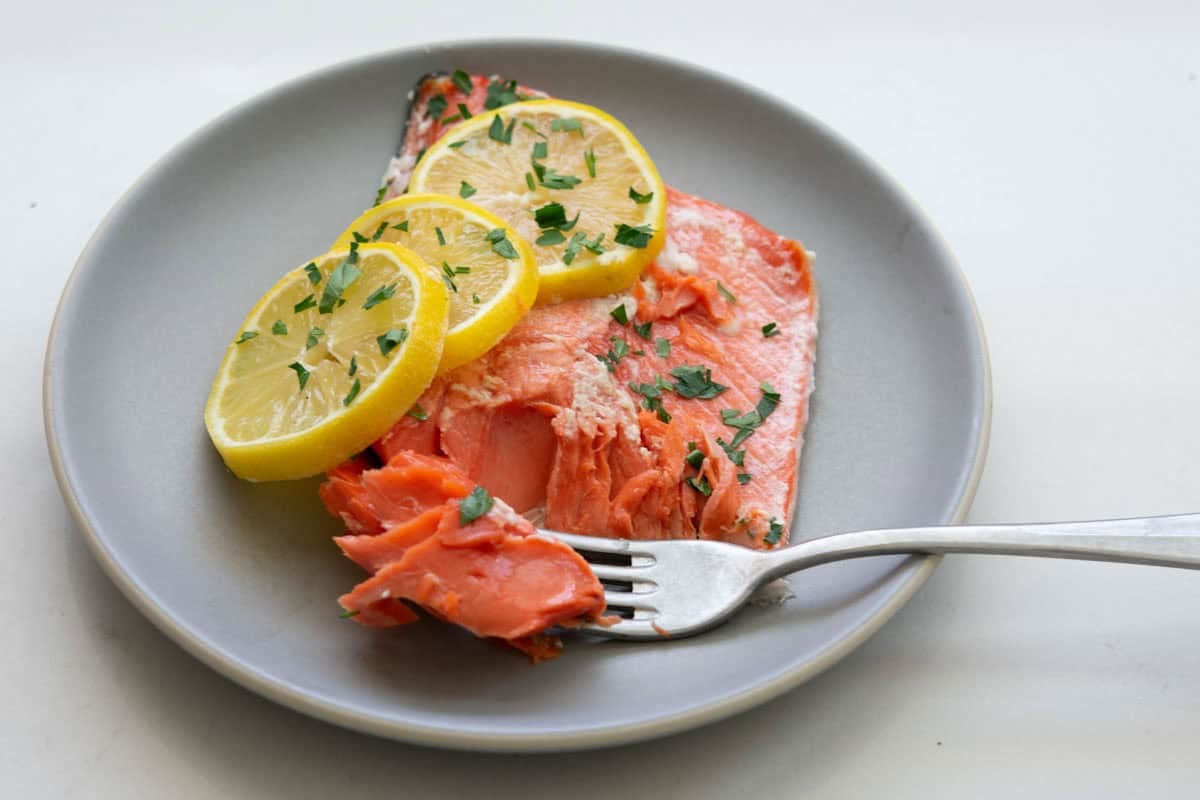
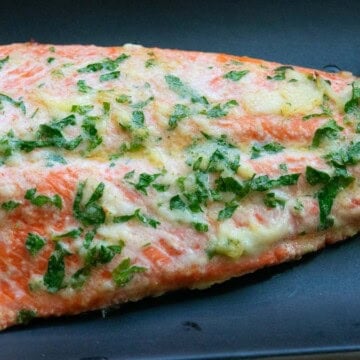
Because sockeye salmon has such low fat content, compared to other types of salmon, it can be easily overcooked and dry. The slow roasting method renders a beautifully juicy and moist sockeye salmon. Its thin fillet also makes the slow roasting time actually very quick!
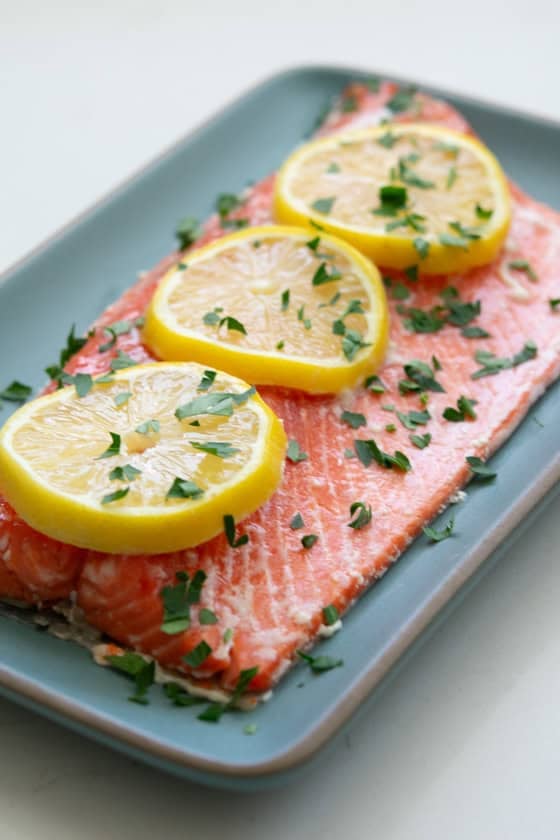
This recipe is ideal to make in the summer time when sockeye salmon is available fresh and you don't want to overly heat up your already hot kitchen, since this bakes at 225 degrees F.
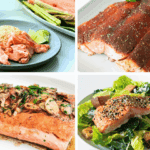
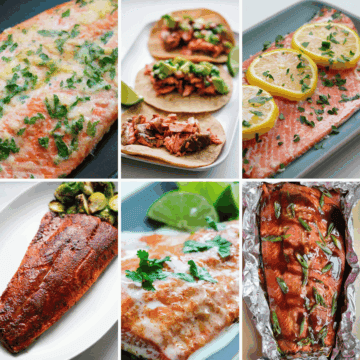
If you're looking for other quick and easy recipes for sockeye salmon, check out these sockeye salmon tacos, Thai red curry coconut glazed salmon, and air fryer garlic butter sockeye salmon.
Jump to:
Ingredients
This recipe is much more about the method and resulting texture of the salmon rather than the ingredients. The ingredients themselves are very simple.
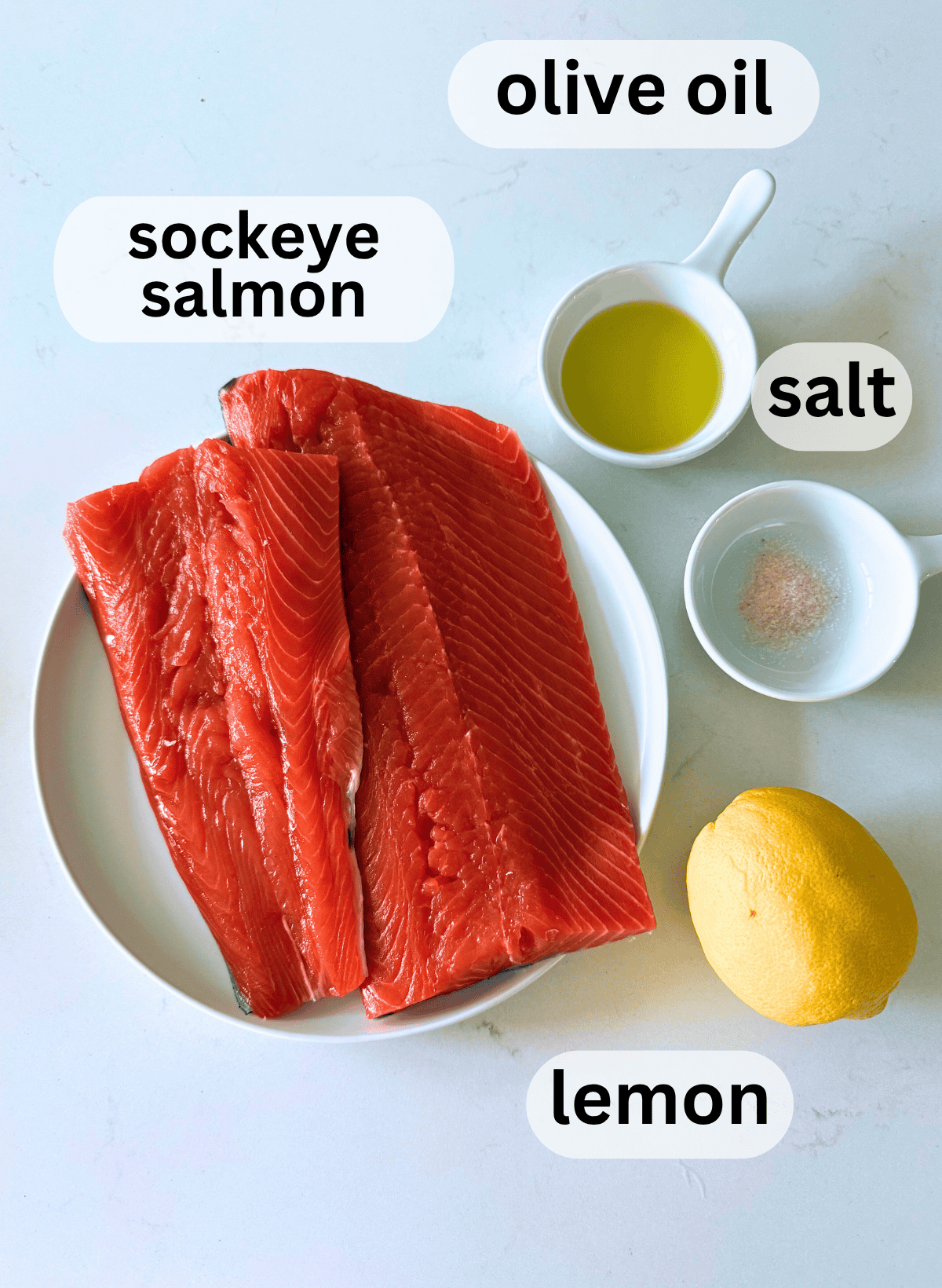
- Sockeye Salmon - Also known as 'red' salmon, sockeye has a low fat content compared to other types of salmon (king, Atlantic, Coho). Only pink and keta salmon rank lower, in terms of fat content, and those fish are usually reserved for canned salmon.
- Find sockeye salmon available fresh in the summer time, when the fishing season runs from late May to July. Otherwise, it's available year round frozen or 'previously frozen.'
- Substitute with Coho salmon, a salmon with a similar filet thickness but less red color and a little more fat content.
- Lemon - In this recipe, the lemon isn't just to squeeze on the filet at the end.
- The lemon slices placed on the fish during cooking really do infuse the fish with a subtle lemon-y flavor.
- The lemons also play a vital role in covering up the surface because the white albumen protein will sneak out of the surface while cooking.
- Olive Oil - In this recipe, I like to use extra virgin olive oil. There is much debate over whether extra virgin olive oil should be used in cooking, but in this recipe, the oven temperature stays well below 300 degrees F.
See recipe card for quantities.
Fat Content of Salmon
| Salmon Type | Fat (g/100g) | Omega-3 (mg/100g) | Typical Source |
|---|---|---|---|
| Farmed Atlantic | ~12 | ~2,500 | Farmed |
| Wild Chinook (King) | ~10.4 | ~2,342 | Wild-caught |
| Wild Coho | ~lower-mid | ~900–1,317 | Wild-caught |
| Wild Sockeye | ~lower-mid | ~730–1,060 | Wild-caught |
| Wild Chum (Keta) | ~low | ~683–706 | Wild-caught |
| Wild Pink | ~lowest | ~564–615 | Wild-caught/canned |
Instructions
The photos below show 1.2 pounds of salmon, cut to fit on a quarter sheet pan. I cooked these in a countertop oven because I prefer not to heat up a whole big oven unless I have to.
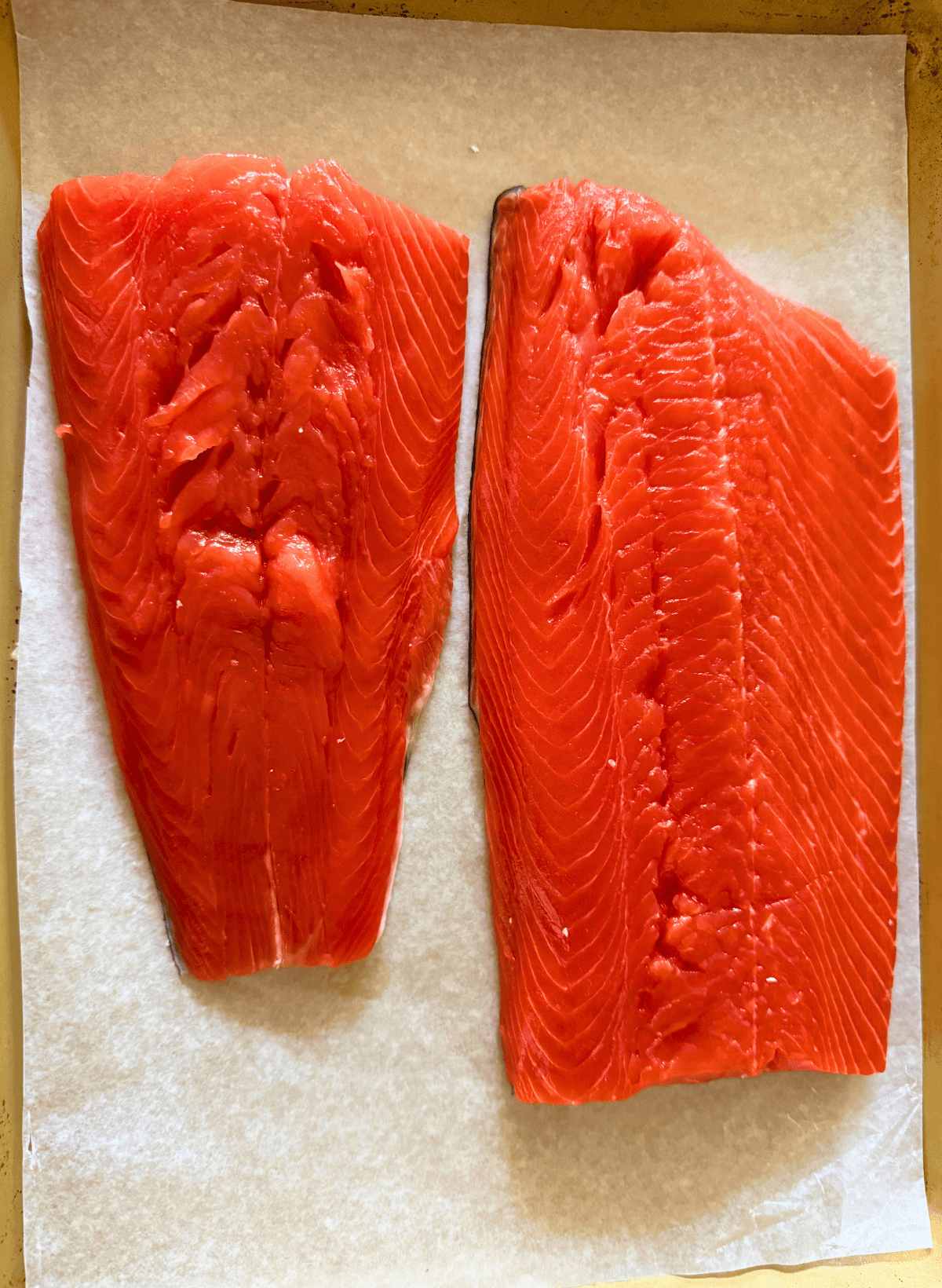
- Step 1: Remove the pin bones and skin, if you don't want to deal with them later. Season the filets with salt to taste.
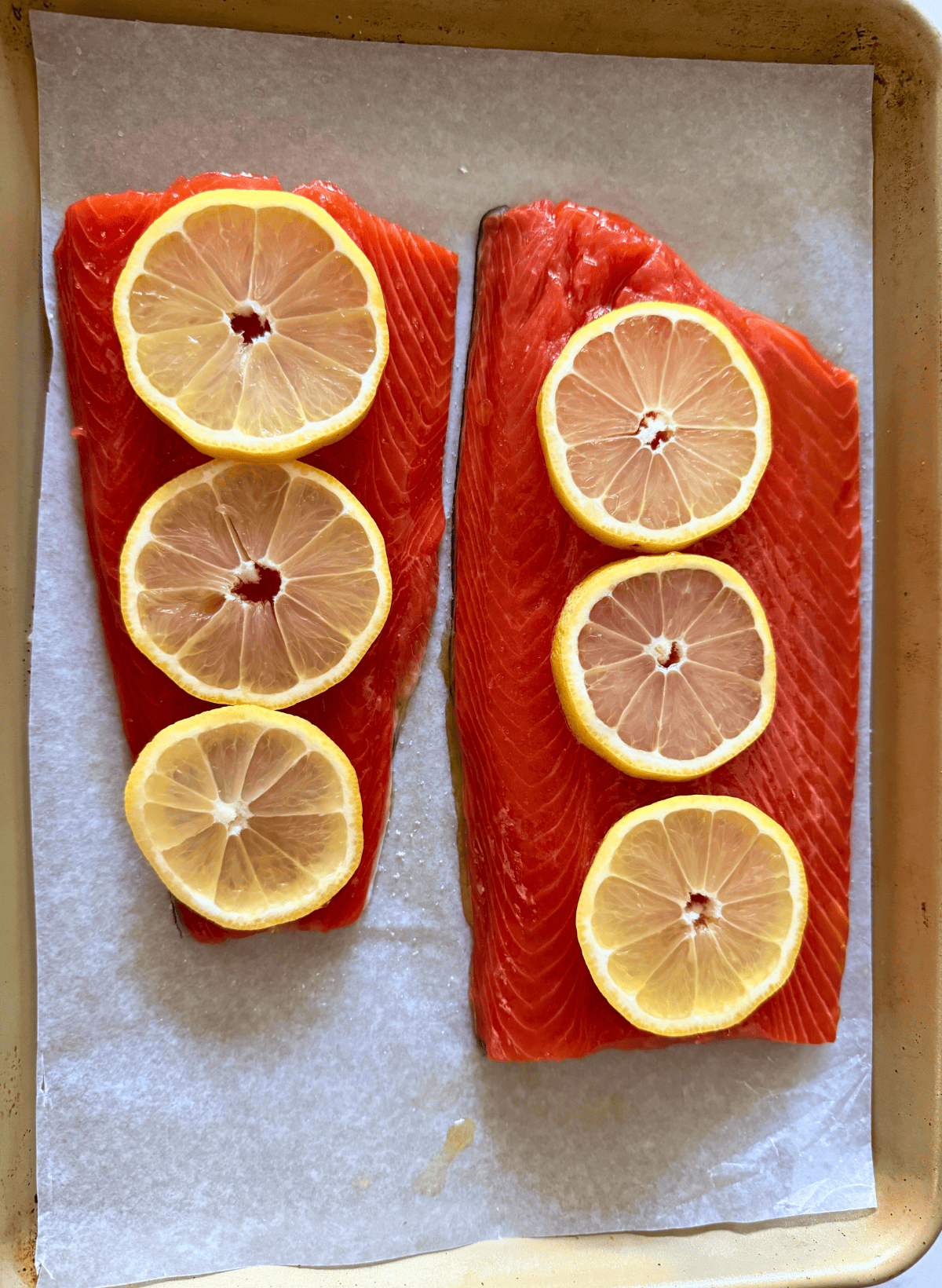
- Step 2: Rub the flesh with olive oil and cover with sliced lemons.
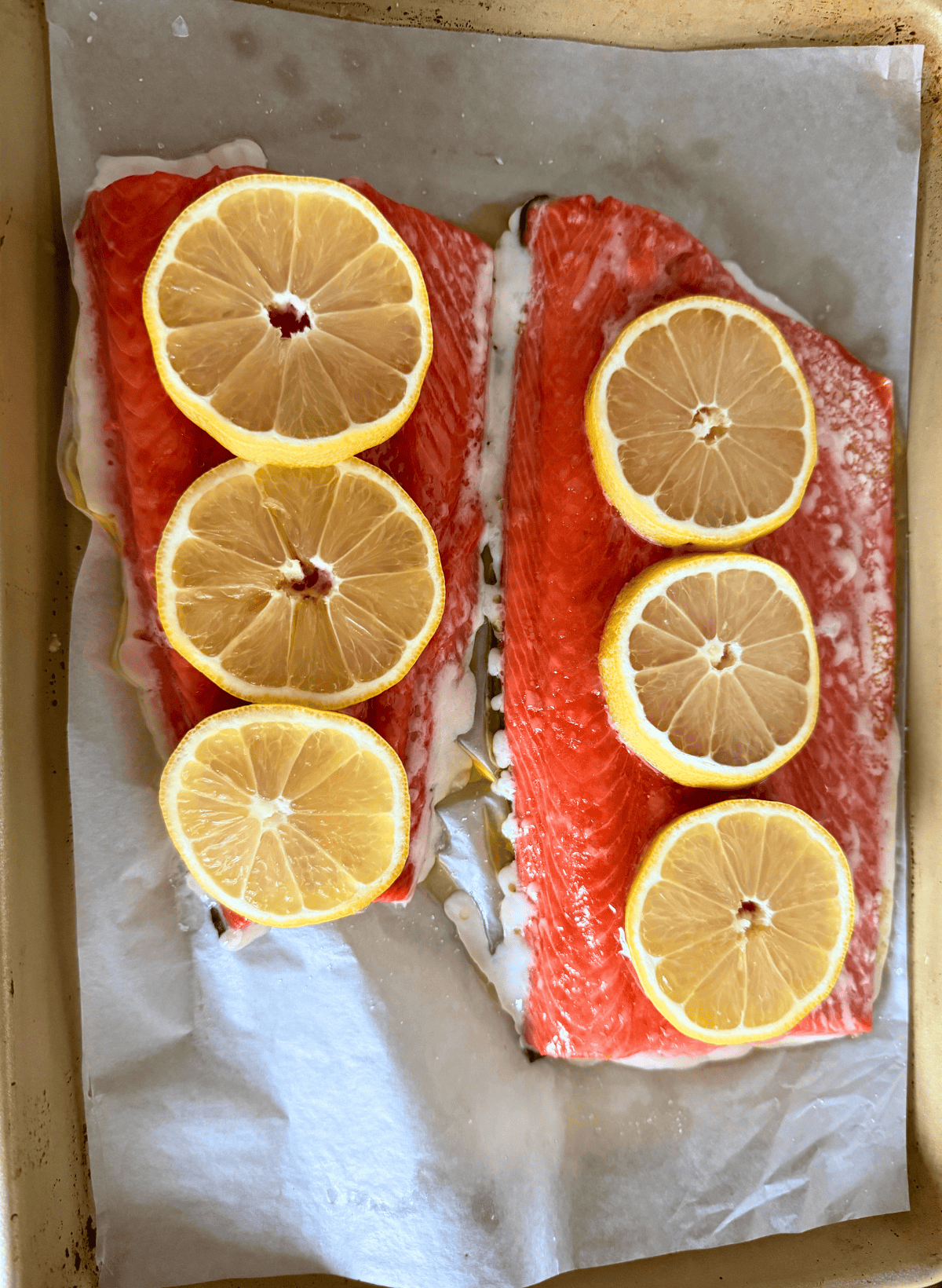
- Step 3: In a preheated 225 degree oven, the salmon will take about 15-20 minutes to slow roast. In a 250 degree oven, it will take 10-15 minutes, but it may not turn out quite as silky at this higher temp.
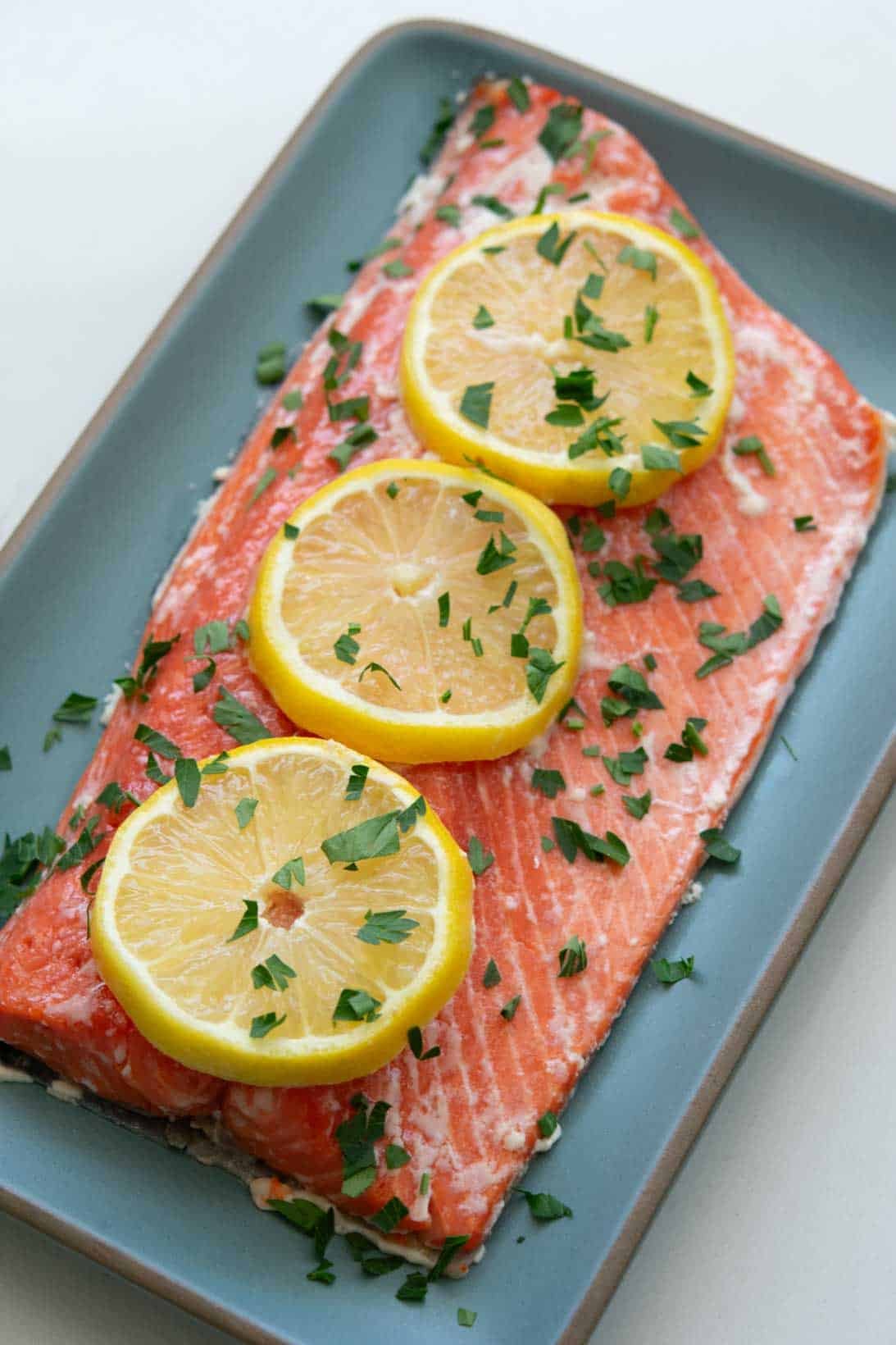
- Step 4: Slow roasting brings out the white albumen protein from the salmon. It especially stands out on sockeye salmon that has such a dark orange flesh. This is why the lemons really help the appearance.
Hint: Slow roasting also works with thicker salmon filets such as King and Atlantic salmon varieties. However, it will take 40-50 minutes long.
Extra Tips
- To make this even quicker, you can slow roast at 250 degrees F for 10-15 minutes. Just keep an eye on it because the sockeye salmon is so thin, it can go from slow roasted and silky to well done very quickly.
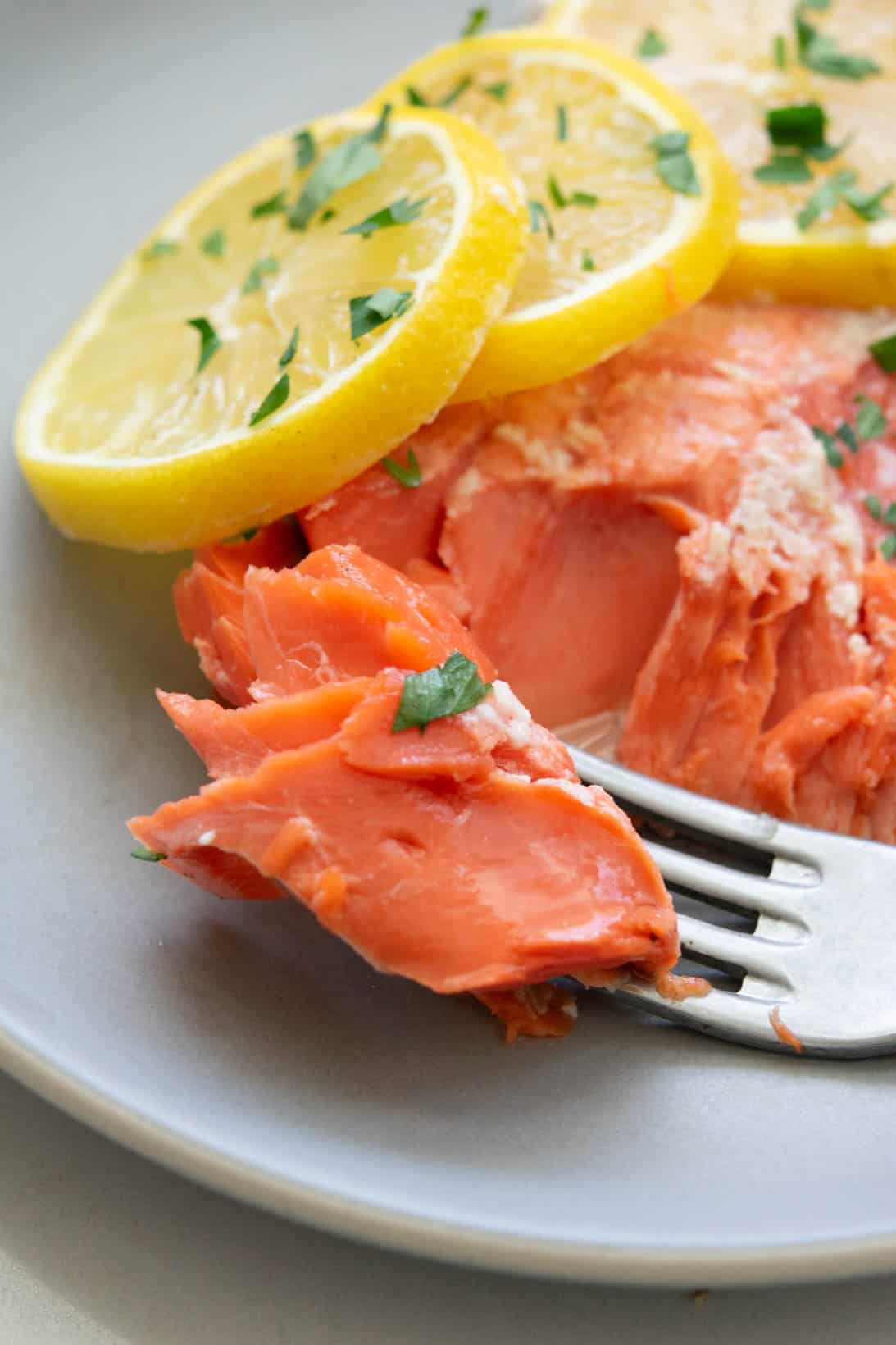
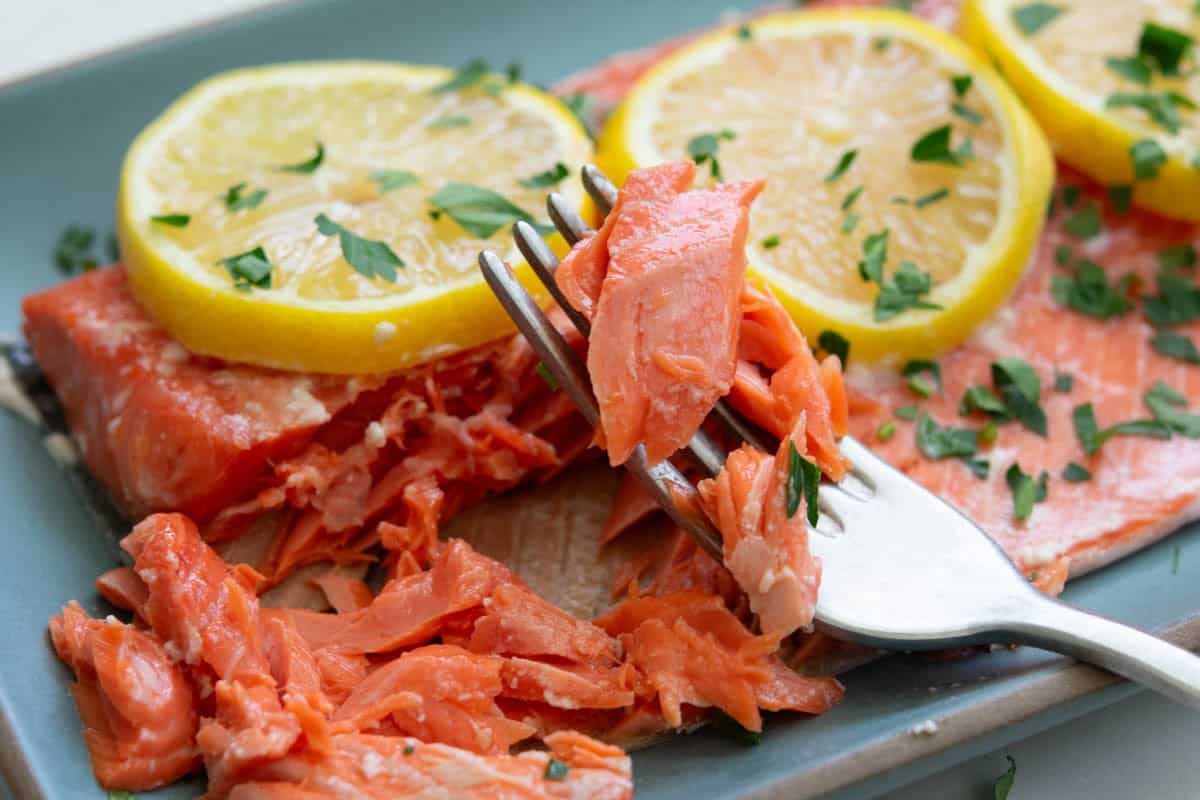
- 125 degrees F for salmon is medium rare. The sockeye salmon might seem "raw" in the middle because it hasn't turned opaque or that pastel orange color. But it is cooked if it flakes easily with a fork. If it's actually still raw, you won't be able to flake it with a fork; you'll just be able to prick the flesh with a fork.
- Let's say you do cook it to 145 degrees F. That is technically "well done". The flesh will be completely pastel orange like you pan-seared it or baked it at 350 degrees F. However, with the slow roast method, it will still be moist and juicy even though it's well done.
Storage
Store in an airtight container for 2-3 days in the fridge. To reheat, you can again put it in a 250 degree oven to warm up for about 5-10 minutes.
If you microwave or reheat at a higher temperature, it may cook to well done and become dry.
Fun Facts about Sockeye Salmon
Alaska royalty — Most sockeye come from Alaska, especially Bristol Bay, home to the world’s biggest sockeye run.
Can-do fish — Sockeye salmon was once the star of canned salmon because of its firm flesh and color.
History on a plate — The indigenous peoples of the Pacific Northwest have relied on sockeye salmon as a food source for thousands of years.
Recipe

Slow Roasted Sockeye Salmon (in 20 minutes!)
Ingredients
- 1 - 1.5 lb sockeye salmon or Coho salmon would work too
- 1 Tb extra virgin olive oil or avocado oil
- 1 ea lemon sliced ¼" thick
- ¼ teaspoon salt or salt to taste
Optional Garnish
- lemon wedges
- a couple pats of soft butter or vegan butter
Instructions
- Preheat oven to 225 degrees F.
- Remove the pin bones and skin from the salmon, if you don't want to deal with them later.
- Place the salmon on an oiled or parchment lined baking sheet, skin side down.
- Rub the oil over the salmon flesh. Season with the salt on top.
- Lay the lemon slices over the top of the fillet.
- Bake for 15-20 minutes or the internal temp is 125 degrees F.
- Serve with lemon wedges and a dollop of butter, if using.
Notes
- To make this even quicker, you can slow roast at 250 degrees F for 10-15 minutes. Just keep an eye on it because the sockeye salmon is so thin, it can go from slow roasted and silky to well done very quickly.
- 125 degrees F for salmon is medium rare. The sockeye salmon might seem "raw" in the middle because it hasn't turned opaque or that pastel orange color. But it is cooked if it flakes easily with a fork. If it's actually still raw, you won't be able to flake it with a fork; you'll just be able to prick the flesh with a fork.
- Let's say you do cook it to 145 degrees F. That is technically "well done". The flesh will be completely pastel orange like you pan-seared it or baked it at 350 degrees F. However, with the slow roast method, it will still be moist and juicy even though it's well done.
- Slow roasting also works with thicker salmon filets such as King and Atlantic salmon varieties. However, it will take 40-50 minutes long.
- Store in an airtight container for 2-3 days in the fridge. To reheat, you can again put it in a 250 degree oven to warm up for about 5-10 minutes.
Leave a Reply