

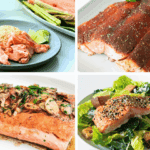







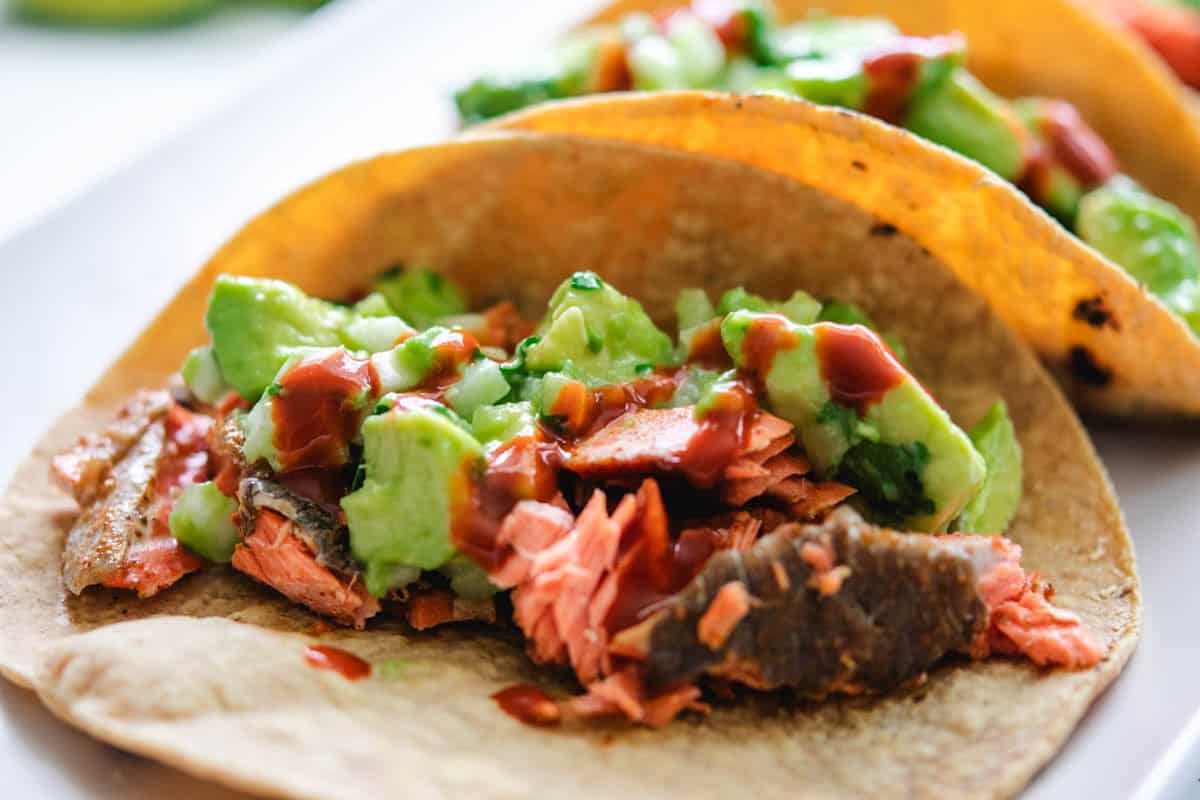
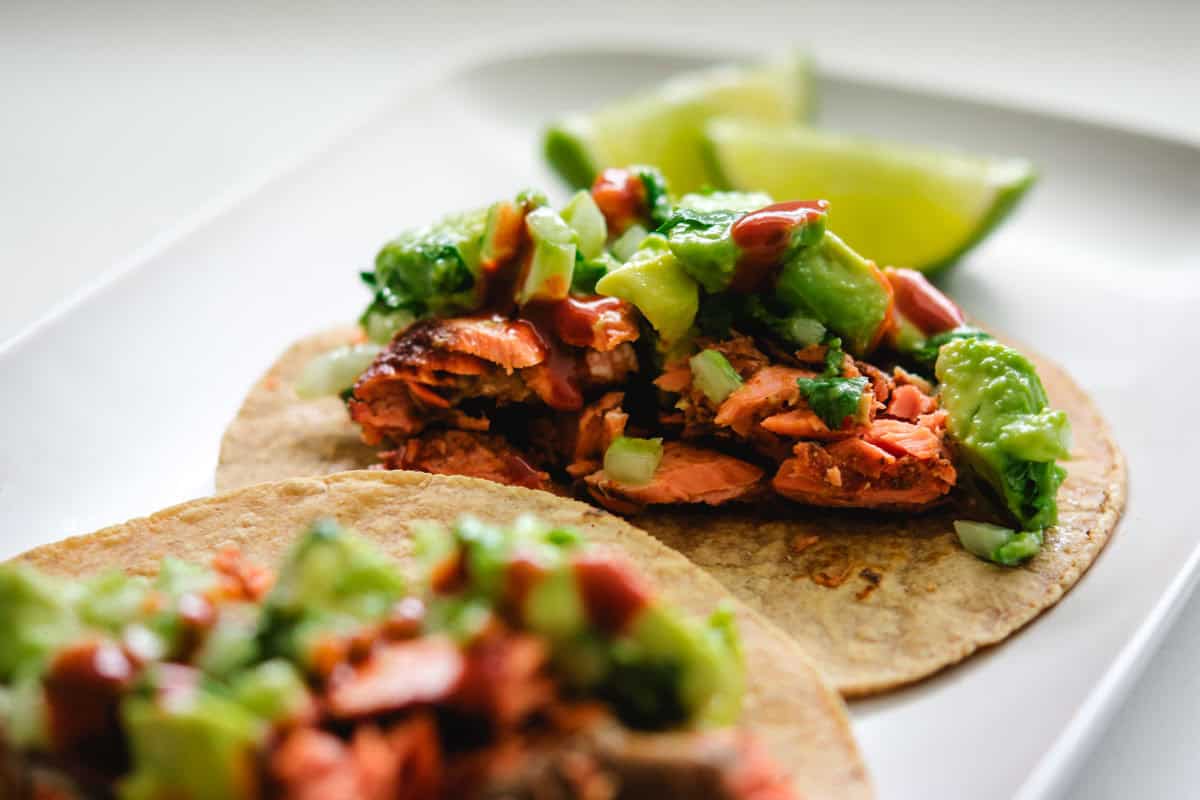
Wild sockeye salmon is IDEAL for making a wholesome taco filling that requires no pre-marinating nor takes a lot of time to assemble. Using classic taco spices, warm corn tortillas, and a creamy avocado salsa, you won't need any mayo or cheese either. Make Taco Tuesday a reality you can enjoy in 20 minutes.
Sockeye salmon does not cook quite like other types of salmon. If you do enjoy this fish, check out this pan-seared sockeye salmon recipe that has a touch of sweetness or this sockeye salmon baked in foil with classic teriyaki flavors.
Jump to:
Why this recipe works for Sockeye Salmon
- Sockeye salmon is a thin fillet. Because it has a large surface area, every morsel that goes into the taco gets a good hit of seasoning.
- Because it is thin, it cooks quick! It will be cook in about 10 minutes, which is just about enough time to make a super easy salsa with avocados, the easiest vegetable to dice.
- Because it is thin and has less fat than king salmon, it has an especially meaty, dense texture that mimics the often dry, chopped grilled chicken/carne asasa/carnitas in regular meat tacos.
You can, of course, use the other types of salmon for these tacos. The cooking time will just need to be adjusted to account for the thicker fillet.
Ingredients
This recipe uses familiar ingredients, many of which may already be in your pantry.

- Sockeye salmon - Be sure to remove any pin bones from the salmon, in case they haven't already been pulled out.
- This recipe works well with the skin on, because the skin gets seasoned with the spices, and you don't notice it too much wrapped in the taco.
- Spices - If you already have a taco seasoning you like, you can use that mix instead of the individual spices in this recipe.
See recipe card for quantities.
Sockeye Salmon vs. Other Salmon
Not all salmon are created equal. While they share the same family name, each variety has its own flavor, texture, and best uses in the kitchen. Here’s how sockeye salmon stacks up against other popular types:
Color & Appearance
Sockeye: Striking deep red flesh that stays vibrant when cooked.
King (Chinook): Ranges from ivory to rich orange; often marbled with fat.
Other salmon (Coho, Atlantic, Pink, Chum): Lighter pink to orange flesh, sometimes less vibrant after cooking.
Flavor
Sockeye: Bold, robust, and intensely “salmony.”
King: Rich, buttery, and luxurious — often described as the most prized flavor.
Other salmon: Coho is mild and delicate, Atlantic is mellow, Pink and Chum are very light in flavor.
Texture & Fat Content
Sockeye: Lean, firm flesh with small flakes; lower fat content.
King: High fat content with a soft, buttery texture.
Other salmon: Coho has moderate fat and medium firmness; Atlantic is higher in fat and tender; Pink and Chum are leaner and softer.
Size
Sockeye: Smaller, typically 5–7 pounds.
King: The largest salmon, often 20–50 pounds.
Other salmon: Coho and Atlantic fall in between, while Pink and Chum are smaller and lighter.
Availability
Sockeye: Always wild-caught, primarily from Alaska and the Pacific Northwest.
King: Wild-caught and highly seasonal, making it rare and expensive.
Other salmon: Atlantic is mostly farmed and widely available; Coho and Pink are wild but vary with season.
Best Uses
Sockeye: Stands up well to bold recipes — grilling, roasting, tacos, or grain bowls.
King: Best enjoyed simply to highlight its buttery richness — seared, poached, or raw as sashimi.
Other salmon: Coho pairs well with light sauces, Atlantic works in almost any recipe, Pink and Chum are often canned, smoked, or used in budget-friendly dishes.
Instructions

- Step 1: Preheat the oven to 375 degrees f. Mix together the taxo seasoning.

- Step 2: Rub both sides of the salmon fillet with the taco seasoning.

- Step 3: Bake the fish for about 10 minutes until cooked through, or it reaches an internal temperature of 145 degrees F.

- Step 4: Fill warmed corn tortillas with chunks of salmon. Top with the avocado salsa and hot sauce.
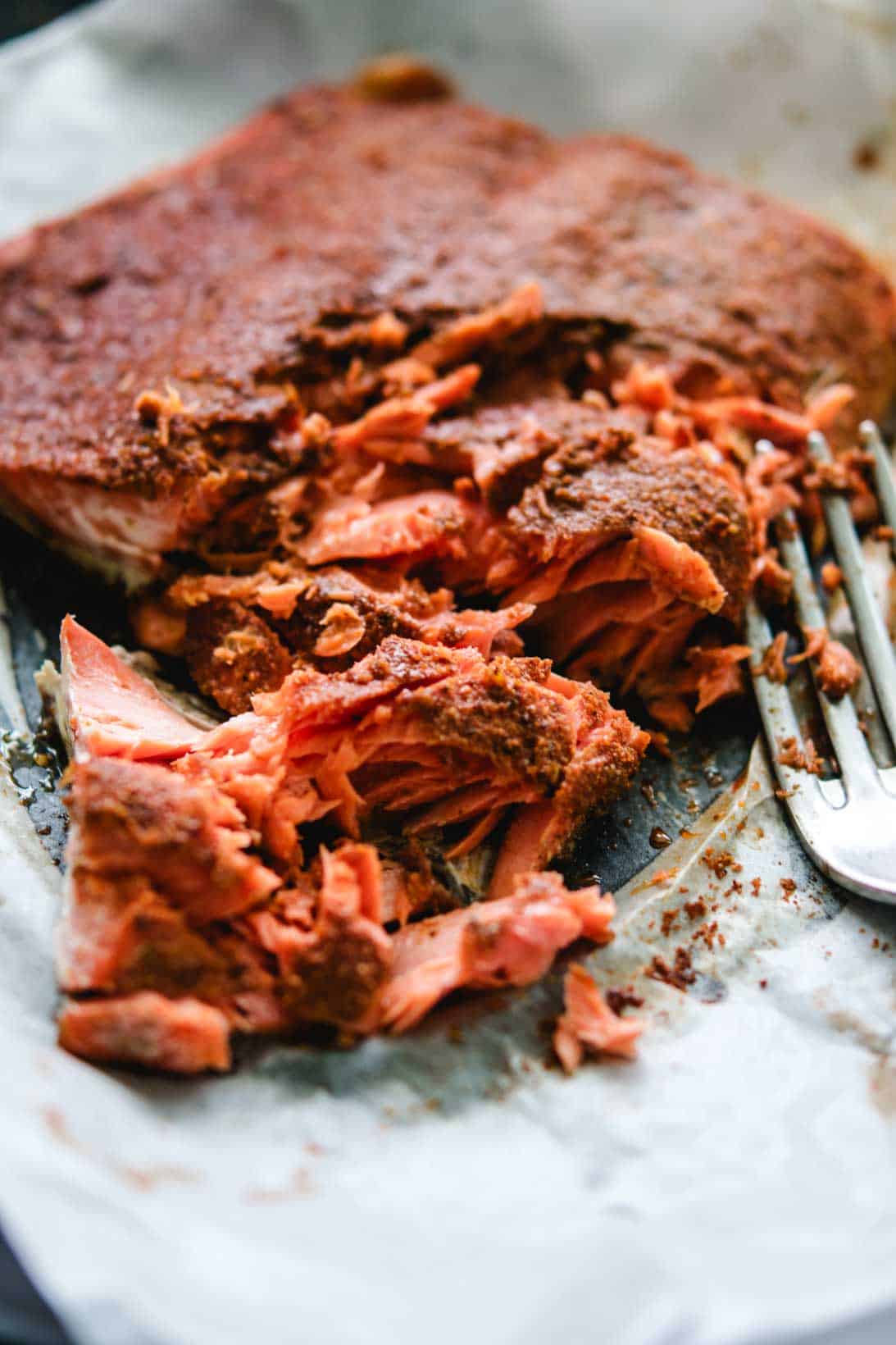
Hint: Salmon skin baked on an unoiled baking sheet or parchment paper will generally stick to the sheet or parchment paper after cooking. You can then flake off the salmon easily, leaving the residual skin behind.
If you want to eat the skin, then be sure the oil the baking sheet or parchment paper.
Tips for Heating Corn Tortillas
Stovetop (Dry Skillet/Comal)
- Heat a cast-iron skillet or comal over medium-high.
- Warm each tortilla for 30–60 seconds per side until pliable and lightly charred.
Open Flame (Gas Burner)
- Place tortilla directly over low flame for 10–15 seconds per side.
- Use tongs and keep a close eye to avoid burning. Adds smoky flavor.
Oven Method
- Wrap a stack of tortillas in foil.
- Bake at 350°F for 10–15 minutes to heat through.
Microwave
- Wrap tortillas in a damp paper towel and place on a plate.
- Microwave in 30-second bursts until warm and flexible.
Keep Warm
- Transfer heated tortillas to a clean kitchen towel or tortilla warmer.
- Cover to trap steam and keep them soft until serving.

Storage
These tacos are best prepared and eaten on the same day.
Leftover salmon can be stored up to 3 days.
Leftover avocado salsa should be covered with extra lime juice and consumed within a day. Skim off the top layer that has oxidized and turned gray.
Fun Facts about Sockeye Salmon
Always wild at heart — Sockeye aren’t farmed. If you’re eating it, it swam free.
Red carpet ready — Their flesh is naturally ruby red thanks to a diet of krill and plankton.
Small but mighty — They usually weigh just 5–7 pounds, but pack tons of flavor.
Recipe

Easy Sockeye Salmon Tacos with Chunky Avocado Salsa
Ingredients
- 8 ox sockeye salmon skin on or off
- 1 teaspoon olive oil, plus additional to line to baking sheet or cooking oli of your choice
- taco seasoning, see recipe below or 1 Tb taco seasoning of your choice
- 6-8 ea corn tortillas 4 inch
Homemade Taco Seasoning
- 1 tsp chili powder
- 1 teaspoon paprika smoked or sweet paprika
- ½ teaspoon cumin ground
- ¼ teaspoon onion powder
- ¼ teaspoon garlic powder
- ¼ tsp oregano
- ½ teaspoon table salt use ¼ teaspoon for low salt
Chunky Avocado Salsa
- 1 ea avocado, diced about 4 oz, without the seed
- 2 Tb lime juice about 1 lime sqeezed
- 1 Tb cilantro chopped
- ⅛ teaspoon table salt
Optional Garnishes
- lime wedges
- hot sauce
Instructions
- Preheat the oven to 375 degrees F. Place the rack in the upper third or middle part of the oven.
- Remove the pin bones from the salmon. Run your finger across the the fillet, feeling for any sharp bones, and remove them with a pair of tweezers.
- Place the salmon on an oiled or parchment lined baking sheet sprayed with oil.
- Rub the olive oil all over both sides of the salmon fillet.
- Sprinkle the taco seasoning over both sides of the filet.
- Bake for about 10 minutes until the salmon reaches an internal temp of 145 degrees F. You will know it's cooked through when you see white albumen protein coming out of the fillet.
- While the salmon is cooking, make the salsa by mixing all the salsa ingredients together.
- To heat the corn tortillas, you can stack them and wrap them in foil to bake in the oven while the salmon cooks. Or heat a cast iron pan or griddle to medium high heat. Place the tortillas directly in the pan and warm through for about a minute on both side. Then put into a tortilla warmer or wrap in foil to stay warm.
- Once the salmon is cooked, flake with a fork and layer into the tortillas with a dollop of avocado salsa.
- Serve hot, and squeeze on lime and hot sauce.
Notes
- If you don't oil the baking sheet or parchment paper, the salmon skin will stick to the surface. This is nice if you don't want to eat the skin. If you do want to eat the skin, make sure to oil the baking surface.
- If you don't have sockeye salmon, this also works well with the tail end of salmon fillet of your choice. The tail end is thin and has less fat like sockeye salmon.
- Premade taco seasoning tends to be heavy in salt. By making your own taco seasoning, as in this recipe, you can add the amount of salt you prefer.
- The avocado salsa should be made just before serving, so it doesn't oxidize and turn gray.
- For a vegetarian version, you can use this same recipe but substitute oyster mushrooms for the salmon.

Leave a Reply